Best Seller Icon Bestseller

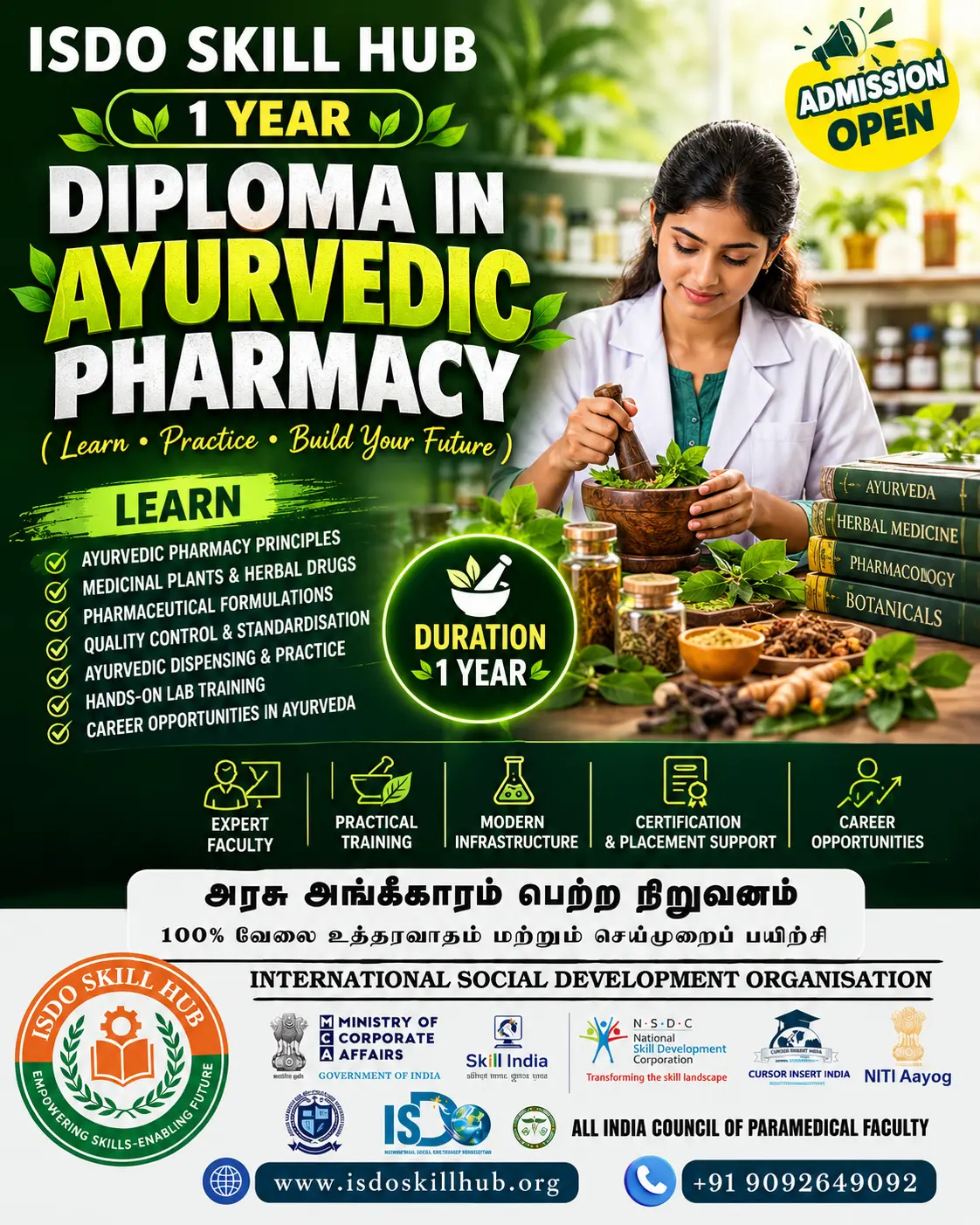
DIPLOMA In AYURVEDIC PHARMACY(S-DAP-6199)

  • Last updated Sep, 2026
  • Certified Course
₹35,000 ₹40,000

Course Includes

  • Duration1 Year
  • Enrolled0
  • Lectures365
  • Videos0
  • Notes0
  • CertificateYes

What you'll learn

Develop comprehensive knowledge of Ayurvedic pharmacy, medicinal plants and traditional pharmaceutical practices. This diploma course covers Ayurvedic principles, identification of herbs, collection and processing of medicinal plants, preparation of traditional Ayurvedic formulations, quality control, storage, basic pharmacology and safe handling practices through structured theory and hands-on practical training.

Show More

Course Syllabus

DIPLOMA IN AYURVEDIC PHARMACY


Unit 1: Fundamentals of Ayurveda

Theory

  • Introduction and history of Ayurveda
  • Basic principles of Ayurveda
  • Panchamahabhuta and Tridosha concepts
  • Dhatu, Mala and Agni concepts
  • Ayurvedic terminology
  • Role and scope of Ayurvedic Pharmacy

Practical

  • Identification of basic Ayurvedic terms
  • Introduction to pharmacy laboratory
  • Observation of commonly used medicinal materials
  • Basic documentation and record keeping

Unit 2: Ayurvedic Pharmacognosy & Medicinal Plants

Theory

  • Introduction to medicinal plants
  • Plant classification and identification
  • Parts of plants used in Ayurveda
  • Botanical and Ayurvedic names
  • Collection and authentication of crude drugs
  • Storage of medicinal plant materials

Practical

  • Identification of common medicinal plants
  • Collection and preparation of plant samples
  • Herbarium preparation
  • Basic organoleptic examination
  • Labelling and storage of crude drugs

Unit 3: Collection, Processing & Preservation of Drugs

Theory

  • Principles of drug collection
  • Seasonal and geographical considerations
  • Cleaning, drying and processing
  • Methods of preservation
  • Prevention of contamination
  • Packaging and storage requirements

Practical

  • Cleaning and sorting of herbal materials
  • Drying techniques
  • Powdering and sieving
  • Proper packaging and labelling
  • Storage-condition observation
  • Preparation of sample drug records

Unit 4: Ayurvedic Pharmaceutical Equipment & Laboratory Practices

Theory

  • Introduction to Ayurvedic pharmacy equipment
  • Traditional and modern pharmaceutical instruments
  • Basic laboratory procedures
  • Measurement and weighing techniques
  • Hygiene and sanitation
  • Laboratory safety and documentation

Practical

  • Handling weighing equipment
  • Basic grinding and mixing equipment
  • Sieving and filtration
  • Cleaning and sanitation procedures
  • Equipment maintenance
  • Laboratory record preparation

Unit 5: Ayurvedic Primary Preparations

Theory

  • Principles of Ayurvedic pharmaceutical preparation
  • Swarasa and Kalka
  • Kwatha and Phanta
  • Hima preparations
  • Basic Churna preparation
  • General quality considerations

Practical

  • Preparation of herbal juice samples
  • Preparation of herbal paste
  • Preparation of decoction
  • Preparation of infusion
  • Preparation of cold infusion
  • Preparation and sieving of herbal powders

Unit 6: Ayurvedic Formulations – Part I

Theory

  • Introduction to Ayurvedic dosage forms
  • Churna
  • Vati/Gutika
  • Avaleha
  • Asava and Arishta
  • General principles of formulation

Practical

  • Churna formulation practice
  • Tablet/pill-form preparation demonstration
  • Avaleha preparation demonstration
  • Fermentation-process observation
  • Packaging and labelling of formulations
  • Batch documentation

Unit 7: Ayurvedic Formulations – Part II

Theory

  • Sneha Kalpana
  • Taila and Ghrita preparations
  • Arka and other liquid preparations
  • Basic topical preparations
  • Selection of ingredients
  • Storage and stability considerations

Practical

  • Preparation of herbal oil
  • Preparation of herbal ghee
  • Basic liquid formulation practice
  • Filtration and clarification
  • Container selection
  • Labelling and storage

Unit 8: Quality Control, Standardization & Safety

Theory

  • Fundamentals of quality control
  • Identity, purity and quality of raw materials
  • Organoleptic evaluation
  • Basic physical and chemical evaluation concepts
  • Contamination and adulteration
  • Good manufacturing and hygiene practices
  • Safe handling and documentation

Practical

  • Organoleptic examination
  • Basic physical-quality checks
  • Adulteration identification demonstrations
  • Sample testing records
  • Quality-control documentation
  • Hygiene and safety audit practice

Unit 9: Ayurvedic Pharmacy Management & Professional Practices

Theory

  • Ayurvedic pharmacy workflow
  • Raw-material inventory management
  • Batch preparation and documentation
  • Packaging and labelling principles
  • Storage and stock management
  • Basic regulatory and professional responsibilities
  • Ethical practices in Ayurvedic pharmacy

Practical

  • Inventory preparation
  • Stock-register maintenance
  • Batch-record preparation
  • Packaging and labelling exercises
  • Pharmacy workflow simulation
  • Quality documentation

Unit 10: Integrated Ayurvedic Pharmacy Practicum

Theory

  • Complete Ayurvedic pharmaceutical workflow
  • Selection and authentication of raw materials
  • Formulation planning
  • Quality and safety review
  • Documentation and presentation
  • Professional pharmacy practices

Practical

  • Raw-material identification
  • Drug processing
  • Preparation of selected Ayurvedic formulations
  • Quality-control checks
  • Packaging and labelling
  • Complete batch documentation
  • Supervised pharmacy practicum
  • Final project presentation

Final Project

Ayurvedic Herbal Formulation & Pharmacy Practice Project

Students will complete a supervised project covering the complete basic Ayurvedic pharmaceutical preparation workflow.

Project Components:

  • Selection and identification of suitable raw materials
  • Documentation of Ayurvedic and botanical names
  • Collection/processing method
  • Preparation of a selected traditional formulation
  • Step-by-step manufacturing record
  • Basic quality-control observations
  • Packaging and labelling
  • Storage recommendations
  • Batch documentation
  • Project report
  • Practical demonstration and viva


Eligibility

Who can apply for this course

10th Pass

Course Fees

Course Fees
:
₹40000/-
Discounted Fees
:
₹ 35000/-
Course Duration
:
1 Year

Review

0.0
Course Rating (0 reviews)
0%
0%
0%
0%
0%


Call
Text Message
Review
Brochure
Email
CHAT